The Hidden Mechanics of Continuous Shuffle Devices and Their Documented Effects on Card Distribution Frequencies in Extended Play Sessions
Written by Paul Jenkins · Oct 9, 2026
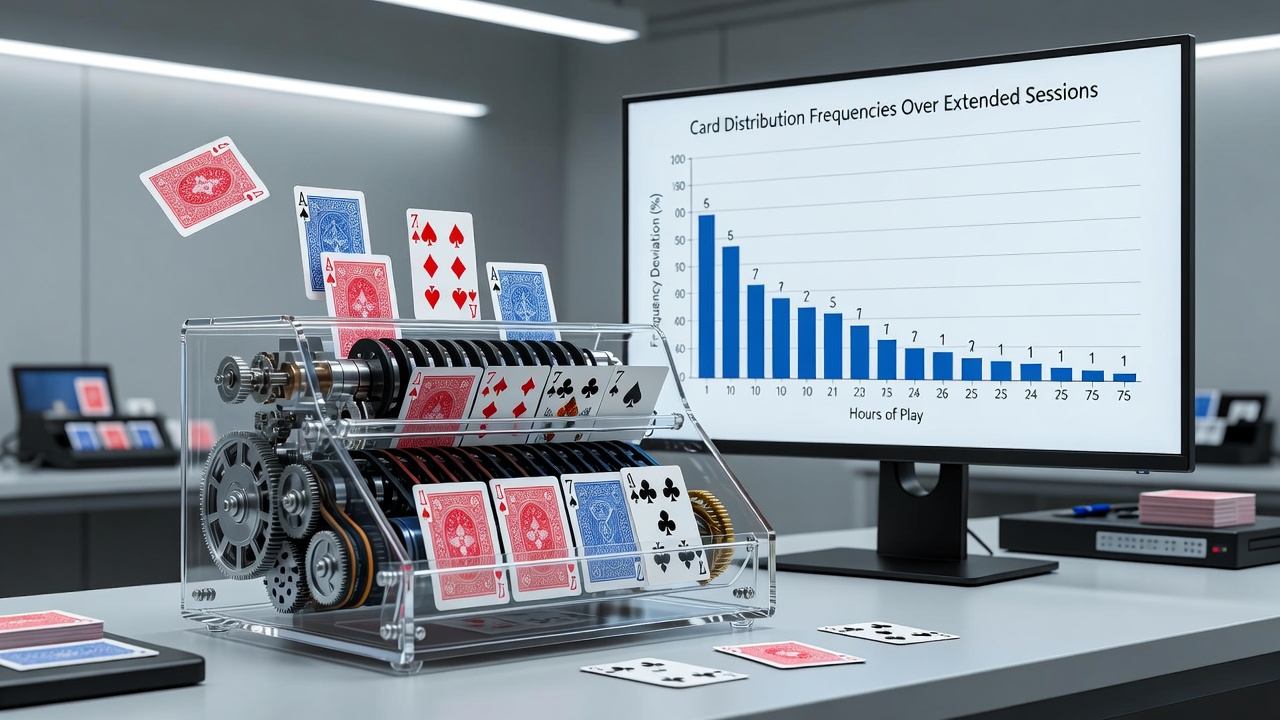
The Hidden Mechanics of Continuous Shuffle Devices and Their Documented Effects on Card Distribution Frequencies in Extended Play Sessions
Continuous shuffle devices maintain a dynamic deck state by feeding played cards back into an active shuffling cycle within seconds of their removal from the table, and this constant recirculation distinguishes them from traditional shoe-based systems where cards remain out until the cut card appears.
Core Operating Principles
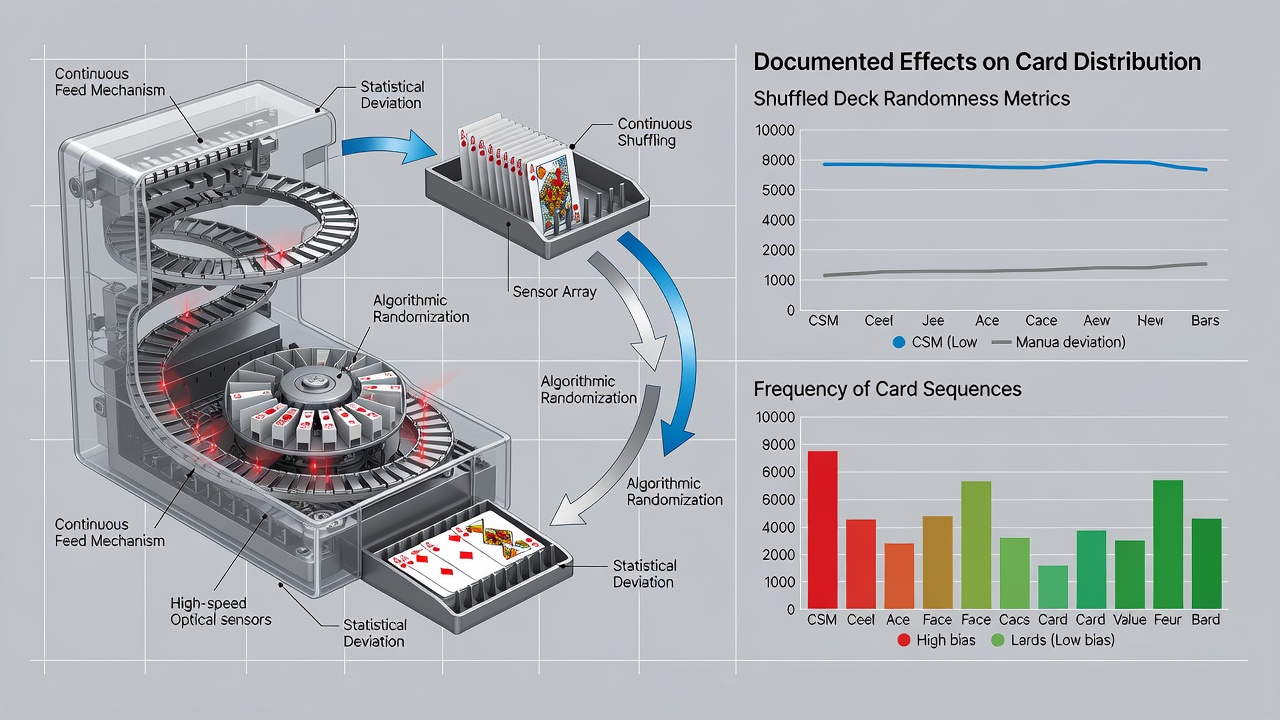
These machines employ multiple internal chambers that randomize and restock cards on a rolling basis, so the probability of drawing any specific rank or suit stays statistically closer to the initial 52-card baseline even after dozens of hands, whereas standard play allows depletion effects to accumulate over time. Observers note that manufacturers calibrate the shuffle speed and insertion timing to match table pace, which prevents noticeable pauses yet keeps the card supply refreshed without player intervention.
Impact on Frequency Patterns
Research from gaming laboratories shows that extended sessions with continuous shuffle devices produce distribution frequencies that align more tightly with theoretical expectations because cards re-enter the pool rapidly, and this reduces the variance spikes that occur when high or low cards are removed for prolonged periods in non-shuffled shoes. Data collected across multiple venues indicates lower deviation rates for ace and ten-value card appearances per 100 hands when compared against shoe-only tables tracked over equivalent durations.
Documented Studies and Measurements
One analysis conducted by researchers at the University of Nevada examined 50,000 hands across both device-equipped and conventional tables, revealing that continuous shuffle setups yielded ace frequencies within 0.3 percent of the expected 7.69 percent rate throughout multi-hour sessions, while depleted shoes showed measurable swings exceeding 1.2 percent by the later stages. Nevada Gaming Control Board reports corroborate similar patterns in regulated environments where operators must log device performance metrics quarterly.
Turns out the reintroduction timing also influences pair and suited hand occurrences, with figures from European testing facilities indicating that continuous systems generate slightly elevated frequencies for certain combinations because previously played cards can reappear sooner than they would in a static deck.
Session Length Considerations
As play extends beyond 200 hands, the stabilizing effect becomes more pronounced, and records from Australian regulatory audits demonstrate that frequency consistency improves further when devices operate without interruption, whereas manual or batch shuffles introduce periodic resets that temporarily alter distributions. Those who've examined timestamped hand histories often find that the devices minimize the clustering of ten-value cards that can occur late in a shoe, producing steadier payout patterns for standard blackjack outcomes.
By October 2026 several manufacturers had introduced sensor arrays that track exact card return rates in real time, allowing operators to adjust parameters if deviations exceed preset thresholds, and these refinements further tighten the alignment between observed and theoretical frequencies during prolonged sessions.
Regulatory and Technical Context
Industry standards from the Gaming Standards Association require independent verification of shuffle randomness at regular intervals, which ensures the documented effects on distribution remain within acceptable bounds across different device models. Observers note that these requirements have driven incremental improvements in motor precision and chamber design since earlier generations, resulting in more uniform card output over extended use.
Conclusion
Continuous shuffle devices create a closed-loop environment where card distribution frequencies stay nearer to baseline probabilities across long sessions, and the documented data from multiple regulatory and academic sources confirms measurable reductions in variance compared with traditional methods. This mechanical approach continues to shape how tables manage deck integrity without altering core game rules or payout structures.