Tracing Blackjack's Journey from French Card Games to Digital Platforms: Shifts in Rules and Cultural Adaptations
Written by Tina Schwarz · Aug 20, 2026
Tracing Blackjack's Journey from French Card Games to Digital Platforms: Shifts in Rules and Cultural Adaptations
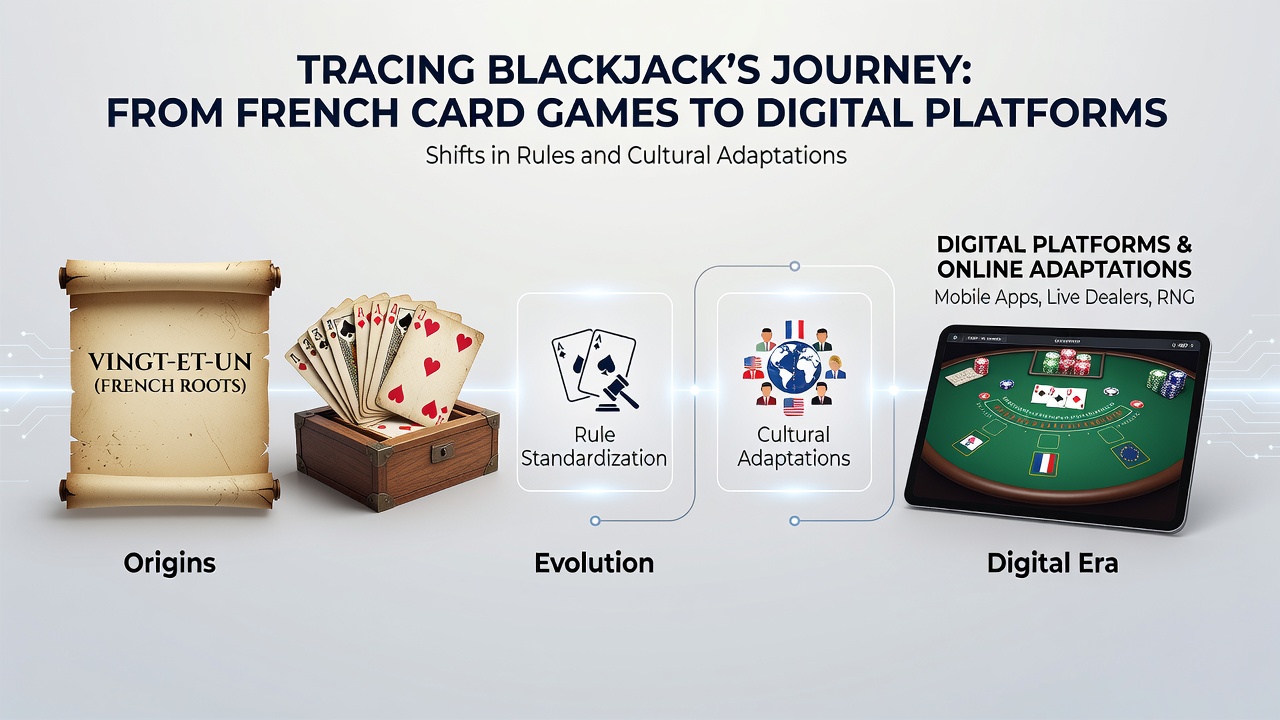
Blackjack traces its roots to 17th-century French card games such as vingt-et-un and chemin de fer, where players aimed to reach a total of 21 without exceeding it, and these early versions traveled across Europe before reaching North America in the 19th century through French colonists and later through Mississippi riverboat gamblers who introduced betting elements that altered payout structures. Researchers at institutions studying European gaming history note that initial rules emphasized dealer discretion on hitting or standing, whereas American adaptations standardized dealer actions to reduce house disputes and increase game speed.
Early Rule Modifications in the Americas
American casinos in the early 20th century modified core mechanics by offering 3-to-2 payouts on natural blackjacks and introducing the option for players to double down on any two cards, changes that data from Nevada gaming records indicate boosted player participation while maintaining house edges around 0.5 percent when optimal strategy applies. Observers note that these shifts distinguished the game from its European predecessors, where insurance bets remained rare and splitting pairs carried stricter limitations in many French and Italian variants.
Cultural Adaptations Across Regions
In Asia, blackjack variants adapted to local preferences through side bets like dragon bonus wagers that reflect cultural affinity for high-volatility outcomes, and studies from the Asia Pacific Association of Gaming Regulators show these additions increased session lengths in Macau and Singapore properties during the 2010s. European markets meanwhile retained closer ties to original French rules with restrictions on doubling after splits in some jurisdictions, creating regional differences that persist into the present. One study revealed that players in the United Kingdom encountered standardized rules under the Gambling Act framework, while Australian venues incorporated continuous shuffling machines earlier than many North American sites to accelerate play cycles.
Transition to Digital Platforms
Digital platforms began replicating blackjack in the mid-1990s as internet infrastructure expanded, and software providers introduced random number generators that replaced physical decks while preserving core probabilities established in land-based settings. Data indicates that by the 2010s, mobile applications accounted for over 60 percent of online blackjack sessions in multiple markets, prompting developers to adjust interfaces for touch-screen play and add features such as instant replay of hands. What's interesting is how these platforms standardized multi-hand options and autoplay functions that traditional tables rarely offered at scale.
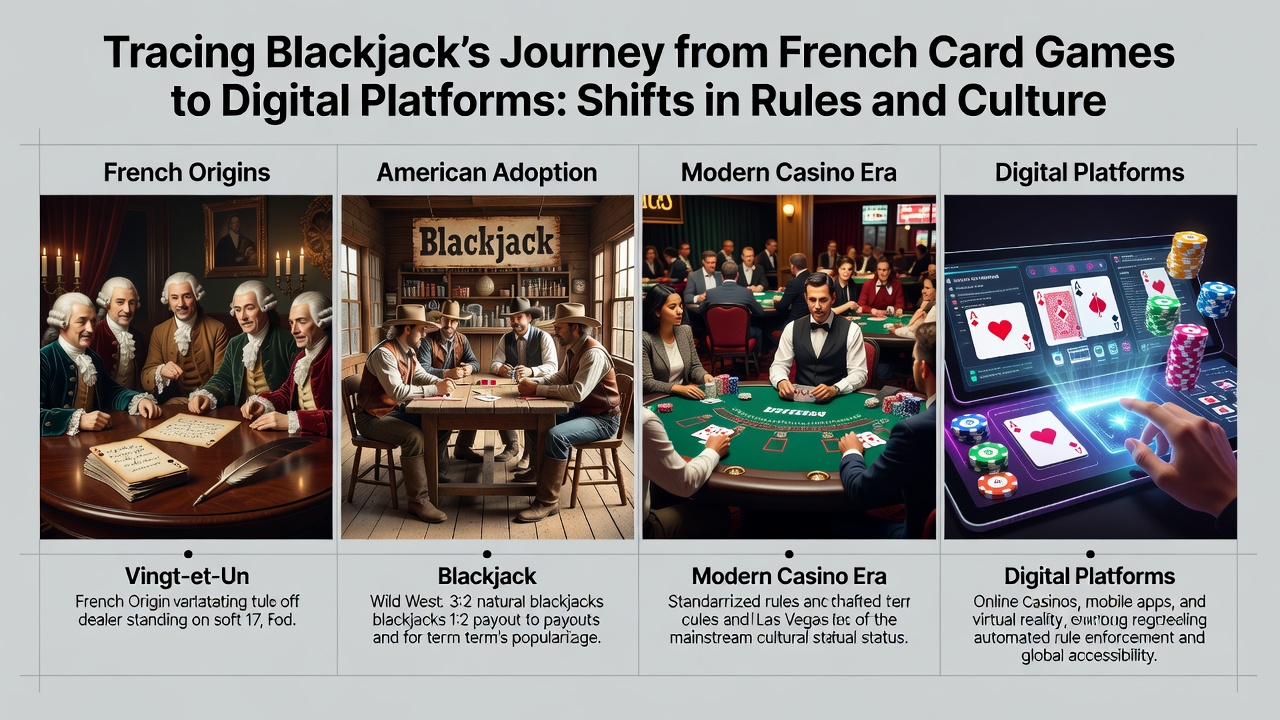
Live dealer streams emerged around 2006 and combined physical cards with video transmission, allowing remote participants to interact via chat while rules remained consistent with the host casino's jurisdiction. According to reports from the Nevada Gaming Control Board, live dealer blackjack tables in regulated markets maintained the same 3-to-2 blackjack payouts as their brick-and-mortar counterparts, although some operators introduced time-limited promotions that temporarily altered side-bet odds. In August 2026 several European operators plan expanded integration of virtual reality environments that simulate classic casino atmospheres while enforcing identical rule sets to existing digital versions.
Regulatory Influences on Contemporary Rules
Government agencies across Canada and Australia have documented how licensing requirements shape available rule combinations, with Ontario's Alcohol and Gaming Commission requiring transparent disclosure of house edges on all digital blackjack offerings. These mandates differ from earlier eras when rule variations depended largely on individual casino management, and the result is greater uniformity within each regulated market. Yet cultural preferences continue to influence optional features, as evidenced by higher adoption rates of surrender options in regions where players historically favored conservative strategies.
Conclusion
Blackjack's evolution from French card tables to digital platforms reflects successive layers of rule refinement and cultural interpretation that maintain the game's essential structure while accommodating new technologies and regional expectations. Evidence from gaming commissions and academic analyses demonstrates that core probabilities remain stable across formats even as presentation and ancillary features adapt, ensuring the game continues to attract participants through both land-based and online channels.